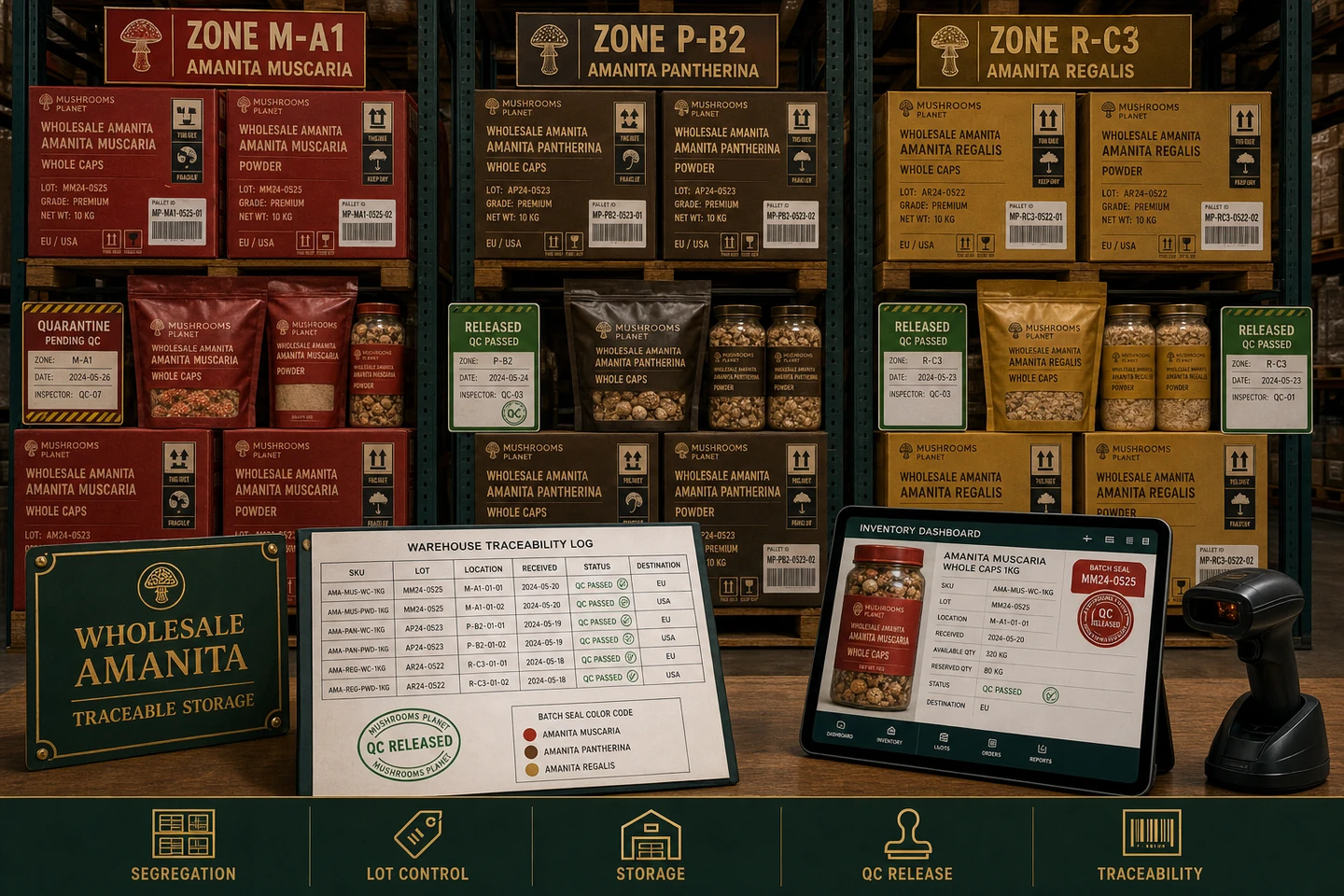
Professional Amanita procurement requires more than adding several related products to one catalog. This guide focuses on preventing mix-ups when related species and formats share one warehouse.
The buyer should convert commercial expectations into written controls for clear labels, sealed locations, batch mapping and disciplined stock rotation. That creates a reference that purchasing, quality, logistics and the supplier can use together.
Start with a controlled product map
List every proposed species and format separately, then record the commercial role of each item. The map should make clear labels, sealed locations, batch mapping and disciplined stock rotation visible before quotations are compared.
Avoid using family-level descriptions where a species-level or format-level decision is required. Clear naming prevents errors later in documents and receiving.
For the multi-species Amanita range, convert this decision into a dated written reference shared by purchasing, quality, warehouse and the supplier. Record the responsible reviewer, the evidence used and any permitted variation so the same control can be applied to the sample, production lot and repeat order.
Define evidence before approval
Decide which specifications, photographs, samples and batch-linked records are needed for the decision. Evidence should represent the proposed supply rather than only a general marketing range.
Use the same review questions across suppliers, while allowing the acceptance criteria to reflect genuine differences between products.
Separate commercial and quality decisions
Price, minimum order quantity and lead time belong beside-not in place of-the product and document review. A commercially attractive offer can still create avoidable operational risk.
Record who approves specification, documents, logistics and final purchase so that one strong feature does not conceal an unresolved requirement.
Test the process on a manageable order
A sample or pilot order should test communication, packing, paperwork and receiving as well as the material itself. Mixed orders are especially useful for finding naming and carton-mapping problems.
Keep approved references and note every deviation before increasing volume or adding another product to the range.
Build repeat-order control
Carry the approved specification and batch feedback into the next purchase. Repeat supply should become more predictable because the reference improves with each delivery.
Reconfirm any changed grade, format, packing method or destination requirement instead of assuming that the previous approval covers it.
Design receiving and segregation controls
Receiving should check carton condition, quantities, lot labels and agreed product attributes before stock is mixed with an existing lot. Assign a clear quarantine or review location for discrepancies and keep different species, grades or formats physically and digitally distinguishable.
Protect traceability through release
Warehouse records should preserve the link from outer carton to inner pack and customer release. Use lot-based locations, controlled relabelling and first-expiry or agreed rotation rules, then investigate any damaged seal, moisture concern or identifier mismatch before dispatch.